
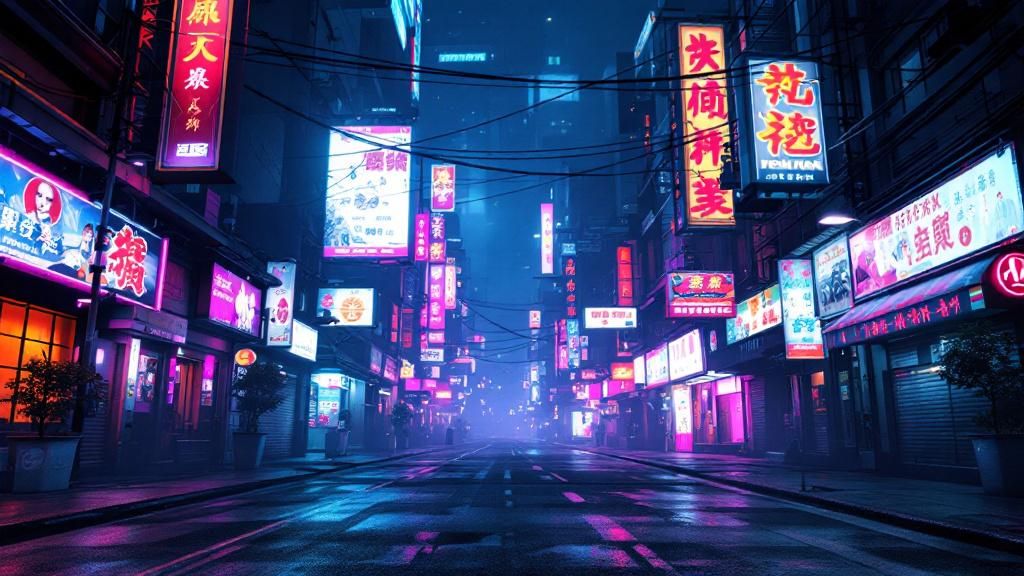
Dead by Daylight has revealed All-Kill: Comeback, a substantial patch that expands upon the asymmetrical horror game’s remarkably acclaimed 2021 K-Pop crossover. The latest addition brings in the Trickster’s Delusion Map set in the neon-soaked Sleepless District, a new Survivor named Kwon Tae-young, and major gameplay enhancements to The Trickster, the Killer who acts as the chapter’s twisted centrepiece. The update demonstrates the designers’ resolve to blending two apparently contradictory genres—K-Pop culture and horror survival—by exploring how The Trickster turns into a weapon his idol persona as an instrument of terror. This patch signifies Dead by Daylight’s greatest gamble so far to demonstrate that horror can come from the most unlikely locations, even the glittering world of pop stardom.
The Restless District Emerges in The Fog
When All-Kill initially released in 2021, players were immediately captivated by the vibrant neon style of the in-game lobby screen. That striking, energetic design approach connected deeply with the community that requests for a full Map based on that aesthetic quickly followed. Now, Behaviour Interactive has answered those calls with the Sleepless District, Dead by Daylight’s first truly urban Realm. This expansive setting takes players away from the game’s traditional forests and abandoned structures, instead immersing them in a bustling cityscape complete with shops, restaurants, and tall advertisements advertising the newest titles from Mightee One Entertainment. The Sleepless District represents one of the most vibrant and visually impressive locations the game has ever featured.
However, beneath the shimmering neon veneer lies something far more sinister. The Trickster’s Delusion Map serves as a window into the fractured psyche of the game’s most distinctive Killer, employing environmental narrative to expand the narrative threads set up in All-Kill: Comeback. Every detail, including the advertisements to the architectural layout, has been carefully crafted to capture The Trickster’s twisted worldview. The Map represents a significant evolution in how Dead by Daylight approaches world-building, transforming a basic gameplay area into a character study that examines the more troubling repercussions of fixation, celebrity, and unrestrained aggression masquerading as artistic expression.
Environmental Storytelling Via City Horror
Creative Director Richard explained that the team initially knew little about what the Map would become when The Trickster was initially unveiled. The original concept was deliberately vague—an cramped metropolitan setting surrounded by imposing buildings and brilliant neon lights. Revisiting the concept for All-Kill: Comeback enabled the developers to weave in narrative elements they’d subsequently created, most notably the introduction of MiNA, The Trickster’s dark counterpart and the manifestation of his darkest fantasies. This character acts as a sinister force throughout the Map, appearing on billboards and environmental details that underscore The Trickster’s spiral into psychological deterioration and his distorted perception of reality.
The Map’s structure produces a uniquely disquieting atmosphere, notably when taking on the role of The Trickster himself. Players adopting the Killer’s viewpoint will see MiNA taunting them from billboards throughout the Sleepless District, blending the boundaries between the character’s internal monologue and objective reality. This psychological dimension lifts the Map beyond mere aesthetic appeal, turning it into an dynamic examination of fantasy and fixation. The environmental storytelling rewards attentive players with richer comprehension into The Trickster’s underlying reasons whilst concurrently building an sense of mounting unease that ideally suits Dead by Daylight’s unbalanced horror mechanics.
- MiNA is displayed across billboards throughout the Map as a disturbing figure.
- Urban setting features shops, restaurants, and bright neon signage.
- Environmental details underscore The Trickster’s psychological unravelling and false beliefs.
- Map design produces distinct experiences depending on whether taking on the role of Killer or Survivor.
The Trickster’s Development and MiNA’s Debut
The Trickster has always remained Dead by Daylight’s most flamboyant Killer, a K-Pop idol whose fixation on entertaining masks something considerably darker. All-Kill: Comeback expands on this portrayal by presenting MiNA, The Trickster’s rogue alter ego and the physical manifestation of his deepest, darkest fantasies. This psychological split reveals the splintered psyche beneath the theatrical presentation and high-fashion attire, transforming what players thought they understood about the character into something far more unsettling and layered.
MiNA serves as the unbridled nature of The Trickster—the violent impulses, the hunger for control, and the distorted aesthetic obsession that compels him to hunt and torment. By bestowing this shadowy facet a recognisable appearance and presence throughout the Sleepless District, the developers have created a storytelling mechanism that explores the duality of celebrity culture and the menacing threat lurking beneath polished exteriors. This development demonstrates Dead by Daylight’s commitment to expanding the mythology whilst maintaining the horror that defines the experience.
A Killer’s Warped Psyche Revealed
MiNA’s introduction through environmental storytelling allows players to observe The Trickster’s psychological turmoil without explicit exposition. The character manifests across billboards and surrounding details within Trickster’s Delusion, producing an eerie feeling that players are observing the Killer’s fractured perception of reality. This technique transforms the Map into a psychological portrait, where each visual detail serves to reinforce the character’s psychological decline and compulsive behaviour.
When taking on the role of The Trickster, encountering MiNA’s image on billboards creates a uniquely bewildering experience that obscures the boundary between external environment and inner thoughts. This game design element ensures that The Trickster’s psychological complexity isn’t merely narrative window dressing but an integral part of the player experience. The design choice transforms the character from a simple killer archetype into a truly disturbing exploration of delusion and fractured identity.
- MiNA represents The Trickster’s destructive urges and unchecked artistic vision.
- Billboards scattered throughout the environment feature MiNA’s mocking presence relentlessly.
- Visual design underscore the Killer’s psychological deterioration and fixation.
- Gameplay mechanics merge fact and fantasy for authentic horror experience.
Webtoons Develop the All-Kill Universe
Dead by Daylight has explored innovative territory by collaborating with Korean agency Red Dog Culture to bring the All-Kill narrative to life through Webtoons, a visual storytelling medium that came from South Korea. This strategic partnership marks the first occasion the creative team has ventured into the All-Kill: Comeback storyline through a medium so firmly embedded in Korean popular culture, fostering a seamless connection between the game’s K-pop horror aesthetic and the creative traditions of its original inspiration. By adopting Webtoons, the creative team have tapped into a medium that resonates authentically with their audience whilst broadening the story scope far beyond what traditional in-game storytelling can deliver.
The Webtoon series functions as a narrative link that contextualizes the events taking place in Trickster’s Delusion and the wider All-Kill universe. Through chapter-based storytelling, players acquire greater knowledge of character motivations, origin information, and the events resulting in the horrifying events presented in the game. This multimedia approach demonstrates Dead by Daylight’s dedication to creating a integrated universe where gameplay, environmental design, and supplementary media work in concert to create a thorough horror offering that goes far past the boundaries of the game itself.
Kwon Tae-young’s Developer Path
Kwon Tae-young, the new Survivor featured in All-Kill: Comeback, brings a engaging backstory grounded in the fast-paced realm of software development. As a talented coder caught in the tension between ambition and integrity, Kwon’s character arc delves into technological exploitation and the ethical sacrifices imposed by the industry. Her inclusion adds depth to the All-Kill narrative, offering players a Survivor whose technical abilities and experience provide distinctive insights into the horror unfolding within The Fog.
The Webtoon series uses Kwon’s story as a lens into the darker underbelly of South Korea’s technology industry, establishing connections between the ruthless entertainment world and the ruthless corporate world. Her path to becoming a Survivor in Dead by Daylight is chronicled through comprehensive visual narrative, enabling players to grasp her underlying reasons and the events that plunged her into the game’s supernatural horror. This character-centred method deepens the overall All-Kill experience.
| Webtoon Chapter | Story Focus |
|---|---|
| Chapter One: Spotlight | The Trickster’s rise to fame and initial descent into obsession |
| Chapter Two: Behind the Curtain | Kwon Tae-young’s involvement with Mightee One Entertainment |
| Chapter Three: MiNA Emerges | The manifestation of The Trickster’s violent alter ego |
Music and Artistic Vision Converge
The creative direction of All-Kill: Comeback extends far beyond gameplay mechanics and aesthetic presentation—music serves as the narrative foundation of this unusual fusion. The soundtrack, crafted specifically for the update, explores the core conflict between K-Pop’s refined, aspirational style and horror’s darker undertones. By creating bespoke pieces that sit at this intersection, the creative studio has created an sonic landscape that reinforces the narrative of The Trickster’s fall from idol to killer, where performance becomes violence and creativity descends into obsession.
The sonic addition to All-Kill: Comeback represents a full-circle moment for the creative team, uniting consultants, voice actors, and musicians who understand both genres intimately. The complementary visual accompaniment enhances this multifaceted presentation, offering audiences another pathway for interaction with the All-Kill universe. By positioning audio not as simple sonic backdrop but as a central storytelling element, Dead by Daylight showcases how fear narratives benefit through unexpected artistic collaborations that push against genre conventions.
- Soundtrack composition examines the intersection of K-Pop and horror
- Music video with lyrics provides visual support to the thematic piece
- Musicians involved across development process for authentic representation
- Music underscores The Trickster’s transformation narrative
Why K-Pop and Horror Work Together
The apparently disparate worlds of K-Pop and horror overlap more significantly than initially apparent. Both genres thrive on intensity, spectacle, and intense emotions—K-Pop channels these elements into spectacle and devotion, whilst horror weaponises them to generate fear and unease. The Trickster’s character captures this contradiction perfectly: a figure whose charisma and talent could generate adoration instead becomes a vessel for violence. This reversal of assumptions creates mental dread that strikes profoundly, as players encounter the malevolent capacity lurking beneath glossy exteriors.
Dead by Daylight’s creative director articulates this perspective clearly: anything can be viewed through a horror framework when contrasted with dark twists. The K-Pop industry’s extensively documented pressures—relentless competition, impossible standards, and psychological toll—offer genuine psychological horror material. By anchoring The Trickster within this context, the game transforms real-world anxieties into otherworldly dread, demonstrating that horror needn’t involve mythical beings or cursed dwellings when personal aspiration and despair can be equally chilling.
