
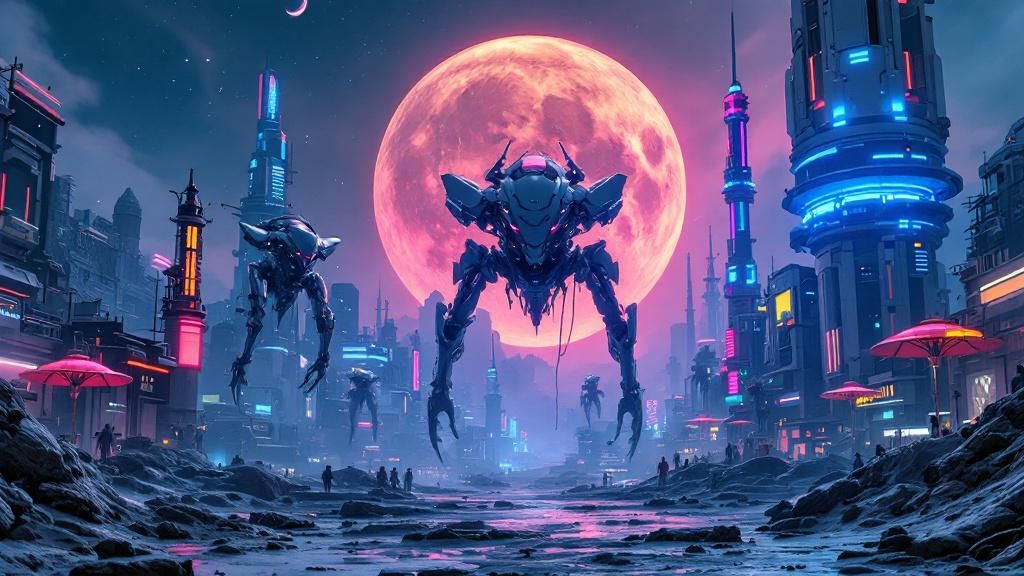
Capcom has revealed the intricate mechanics behind Pragmata, its anticipated science-fiction adventure set to launch on PlayStation 5 on 17 April. During a hands-on session, the game’s creative leads Yonghee Cho and Naoto Oyama revealed how the studio has integrated combat, hacking, and puzzle-solving into a strategically complex experience. The pair discussed the game’s graphical presentation, development challenges, and the remarkably strong reception to the newly launched Sketchbook demo. After multiple delays since its first announcement in 2020, Pragmata is finally approaching its release date, with Capcom’s team committed to creating something truly unique in the sci-fi action genre.
Combining Shooting and Hacking in Innovative Game Design
At the heart of Pragmata lies an creative blend of traditional combat mechanics with puzzle mechanics that require strategic thinking. Rather than treating these systems as separate components, Capcom has designed them to work in concert, forcing players to choose between engage enemies directly or bypass them completely through Diana’s hacking abilities. This dual approach opens various routes through each encounter, benefiting both aggressive players and those who favour a more methodical, cerebral approach to problem-solving.
The dynamic between gunplay and hacking becomes especially clear during boss encounters and environmental puzzles scattered throughout the carefully designed New York setting. Players must evaluate every scenario carefully, taking into account resource management alongside their favoured fighting approach. Producer Naoto Oyama stressed that the team polished these systems extensively during creation, ensuring that neither system dominated the other. The result is a play experience that feels novel and dynamic, where player control and strategic choices take centre stage throughout the adventure.
- Hacking disables enemy shields before direct combat engagement
- Resource management determines the combat and puzzle solutions available
- Multiple pathways foster varied tactical strategies and playstyles
- Environmental puzzles integrate seamlessly with combat encounters
The Development from Initial Vision to Effortless Integration
Developing Pragmata‘s distinctive mechanical foundation involved considerable iteration and experimentation. Director Yonghee Cho explained that the team explored many methods before settling on the current system, which focuses on player choice and environmental engagement. Early prototypes tested various balance points between hacking frequency and battle intensity, with developers finally determining that neither should dominate the experience. This commitment to equilibrium accounts for some of the game’s lengthy development period, as Capcom would not compromise on the central creative vision.
The studio’s dedication to fluid integration extended beyond mere mechanical balance. Every enemy design, from the streamlined mechanical foes to larger mechanical adversaries, was engineered with both combat and hacking scenarios in mind. The visual feedback systems—such as the dramatic shield destruction sequences—reinforce player agency and make tactical decisions feel impactful. This holistic approach to game design demonstrates Capcom’s commitment to create something truly unique within the sci-fi action genre.
Visual Design Excellence and Technical Precision
Pragmata’s visual presentation stands as a reflection of Capcom’s careful attention to science fiction world creation. Director Yonghee Cho collaborated extensively with the modelling and background teams to guarantee that every mechanical element conveyed both sophistication and purposeful design. Unlike living beings in titles such as Resident Evil, where natural details like blood deliver inherent visual richness, the game’s streamlined mechanical adversaries demanded intentional artistry. The team employed careful application of decals, subtle grooves, and metallic finishes to imbue these artificial constructs with layered detail and sophistication, ensuring they don’t appearing flat or sterile.
The intricately designed New York setting serves as the ideal foundation for these graphical accomplishments. Producer Naoto Oyama highlighted that polish reached to every component of the adversarial units, encompassing their appearance after Diana’s breach neutralises their defensive barriers. This meticulous approach elevates battle sequences into graphically compelling spectacles where destruction and damage convey narrative. The near-futuristic aesthetic differentiates Pragmata notably from Capcom’s remaining properties, creating a unique aesthetic signature that enhances the game’s groundbreaking mechanical integration.
Creating Mechanical Beauty across the Moon’s Surface
Developing visually compelling mechanical designs posed distinct challenges that demanded innovative solutions from Capcom’s creative direction team. Natural environments inherently contain abundant visual information that shapes player perception and establishes atmosphere. Conversely, artificial machines risk appearing sterile without deliberate creative decisions. The creative team recognised this challenge from the outset and committed to incorporating multiple layers of visual depth through meticulous material work, surface detail, and structural complexity that makes each enemy bot feel substantial and threatening.
The shield destruction sequences demonstrate this dedication to visual storytelling. When Diana breaches an enemy bot, the shield’s sudden collapse delivers crucial feedback that strengthens player agency and tactical success. This satisfying visual moment converts puzzle-solving moments into satisfying interactive experiences. Every refined component, from the bot’s smooth exterior to the exposed mechanisms beneath damaged shields, contributes to a cohesive visual language that enhances combat encounters beyond mere mechanical interactions into striking narrative-driven scenes.
- Surface details and textures add visual depth to avoid a flat appearance
- Shield destruction sequences provide dynamic visual feedback for successful hacking attempts
- Metallic finishes and material work create near-futuristic aesthetic identity
Tactical Hacking Points and Resource Allocation Frameworks
Pragmata’s combat system fundamentally revolves around Diana’s hacking capabilities, which serve as the bridge between puzzles and combat encounters. Rather than relying solely on traditional gunplay, players must locate weak hacking nodes on enemy bots and exploit them strategically. This mechanic transforms encounters into tactical puzzles where observation and planning matter just as much as reflexes. Managing resources is essential as players must decide which nodes to target, considering both immediate threats and long-term survival. The system promotes inventive thinking, giving advantages to those who analyse enemy patterns and tactical openings before engaging in direct confrontation.
The integration of hacking into the wider economic systems creates substantial tactical complexity. Players must balance their frequency of hacking against available power reserves, creating challenging choices about when to engage offensively and when to retreat for recovery. This interplay of aggressive action and careful resource handling defines Pragmata’s distinctive gameplay character. Enemy bots themselves function as resource sources, with their elimination providing useful components for upgrades and crafting. The interplay between these systems guarantees that every engagement offers multiple viable solutions, supporting different playstyles and promoting experimentation throughout the moon-based journey.
| Hacking Node Type | Strategic Function |
|---|---|
| Shield Disruptors | Temporarily disable protective barriers, exposing vulnerable internal systems |
| Movement Inhibitors | Restrict enemy mobility, creating tactical advantages during combat encounters |
| Weapon Dampeners | Reduce enemy firepower output, minimising incoming damage to Diana |
| Power Siphons | Extract energy from bots to replenish Diana’s hacking reserves mid-battle |
| Self-Destruct Triggers | Override enemy systems to cause internal failures and eliminate threats permanently |
Personalisation and Strategic Adaptability
Pragmata equips players through comprehensive personalisation features that allow customisation of Diana’s hacking suite. Various hacking tools offer distinct strategic advantages, enabling players to tailor their approach to particular situations. Some programmes focus on attacking power, whilst others emphasise defensive resilience or resource acquisition. This adaptability ensures that player preference directly influences tactical options, creating multiple valid approaches to the same encounters. The personalisation framework encourages trying new combinations and prompts players to find connections across various hacking tools.
The upgrade system further enhances tactical adaptability by permitting players to specialise their capabilities incrementally throughout the campaign. Investing in specific hacking nodes or programmes creates distinct playstyle variations, from aggressive bot-disabling specialists to cautious resource-management experts. This progression system ensures that individual player choices significantly affect gameplay experience, creating personal investment in Diana’s growth. Subsequent playthroughs serve as opportunities to discover alternative specialisation paths, significantly enhancing Pragmata’s replay value and strategic richness.
Immersive Audio Design and Propulsion System Innovation
Pragmata’s sonic environment represents a major technical accomplishment, with Capcom harnessing the PlayStation 5’s sophisticated audio features to create an immersive sound world. The game’s audio design extends far beyond standard musical accompaniment, with ambient noises, mechanical effects, and haptic cues all contributing to a integrated sound experience. Director Yonghee Cho and his team meticulously crafted sound signals that transmit critical gameplay data, letting players foresee enemy positions and exploitable moments via audio only. This multi-sensory strategy transforms combat situations into engaging, data-dense environments where audio plays an equally crucial role as visual feedback.
The technical implementation of Pragmata’s audio showcases Capcom’s dedication to optimising PS5 system potential. The console’s custom audio processor facilitates dynamic spatial audio processing, creating three-dimensional audio environments that adapt responsively to user input and ambient shifts. Breach sequences generate distinct sonic signatures that vary according to the systems activated and adversary classifications encountered, delivering immediate auditory confirmation of tactical effectiveness. This sophisticated audio engineering guarantees that every mechanical interaction carries weight and significance, amplifying the overall sense of immersion and tactical involvement throughout Diana’s science fiction journey.
- Spatial audio creates engaging three-dimensional sonic environments that adapt to gameplay
- Distinct audio signatures separate hacking tools and enemy bot varieties effectively
- Immediate audio processing offers quick tactical feedback throughout combat exchanges
Development Journey and Community Feedback
Pragmata’s journey to launch has been far from smooth, with the ambitious sci-fi adventure encountering multiple postponements since its initial reveal in 2020. First intended for 2022, the game was then postponed to 2023 before being put on indefinite hold as Capcom’s creative team refined their vision. Despite these setbacks, producer Naoto Oyama emphasised that the team remained steadfast in its dedication to creating something genuinely unique. The move to unveil a playable demo turned out to be transformative, giving players the chance to experience firsthand what sets Pragmata apart. The reaction surpassed expectations, with overwhelmingly positive reception catching off guard the developers who had expected more divided opinions from the gaming community.
Director Yonghee Cho discussed the increasing demands that came with the game’s rising excitement, accepting that striving to fulfil every player’s expectation likely contributed to the extended development cycle. Nevertheless, this meticulous approach has evidently paid dividends, as shown through the warm welcome to the Pragmata Sketchbook demo. The team’s consistent dedication and perseverance throughout the delays have generated genuine enthusiasm for the April 17 launch. Oyama articulated a complex mixture of reassurance and concern as players finally engage with the finished product, a sentiment that highlights Capcom’s dedication to creating an offering that justifies the substantial delay and elevated expectations surrounding this singular PlayStation 5 title.
