
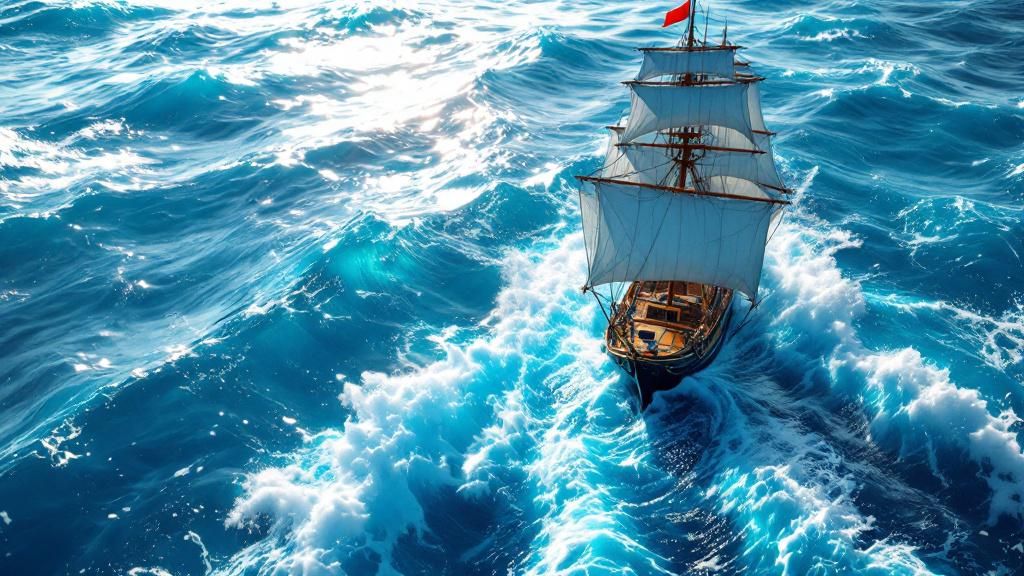
Studio Wildcard, the studio behind the hugely popular Ark: Survival Evolved franchise, is breathing new life into abandoned ideas from one of its most notorious failures. The studio’s 2018 seafaring survival title Atlas, which received poor reviews and never recovered, is being partially resurrected through Ark: Survival Ascended’s upcoming Tides of Fortune DLC. Rather than repeating Atlas’s mistakes, Studio Wildcard co-founders Jeremy Stieglitz and Jesse Rapczak have cherry-picked the elements that genuinely succeeded—particularly the sailing mechanics and water physics—whilst ditching the punishing game design that made the original unplayable for most players. The new maritime DLC represents a deliberate opportunity at delivering the pirate adventure experience that Atlas promised but didn’t achieve.
Moving Past an Ambitious Failed New Prospect
When Atlas launched in Dec 2018, it arrived with significant ambitions but substantial technical issues. The pirate survival game set in an open world featured a interconnected ocean network composed of stitched-together servers, enabling players to sail across vast distances whilst battling rivals and gathering resources. However, performance problems and stability problems plagued the launch, resulting in overwhelmingly negative reviews that the game failed to overcome. Unlike Ark: Survival Evolved, which bounced back from its own rocky start to become a cultural sensation, Atlas faded into obscurity despite its innovative concepts.
Jeremy Stieglitz acknowledged the game’s core design issues during his latest discussion with PC Gamer. The core issue wasn’t the technical elements or concepts themselves, but rather how they formed a game experience that felt unnecessarily punishing. Collecting materials required painstaking effort—logs could only be carried one at a time, ships had to be constructed plank by plank—and a solitary tactical error could wipe out many hours of progress. “It’s a game that’s insanely punishing, and if you make one wrong turn you’ve just lost 50 hours of progress,” Stieglitz explained, though he remained genuinely fond of certain mechanics.
- Atlas offered interconnected maritime servers enabling cross-server sailing adventures
- Resource collection was time-consuming and purposefully lengthy
- Defeat meant starting over from the beginning with few recovery options
- Water physics and maritime controls were genuinely rewarding to players
What Failed with Atlas
Atlas launched in December 2018 with grand ambitions but faltered right away upon arrival. The expansive pirate-themed survival experience was built on cutting-edge systems—a networked ocean consisting of linked server systems that allowed players to navigate freely between them whilst taking part in sea battles and resource gathering. Yet the sophisticated system architecture failed to surmount the practical problems that affected the debut. Performance issues and technical instability produced a poor first impression, and the severely critical reception that followed hindered any comeback attempt. Unlike Ark: Survival Evolved, which eventually transcended its own problematic release, Atlas was unable to restore player confidence.
The fundamental disconnect between Atlas’s technological ambition and its actual gameplay experience became increasingly apparent. Studio Wildcard had created something truly original from a technological perspective, but the game design that wrapped around that technology created more annoyance than pleasure. The developers had deployed systems that sounded appealing theoretically but proved exhausting in practice. What should have been an exciting pirate adventure instead became a gruelling endurance test that demanded significantly more forbearance for setbacks than most players possessed. The game is still available for purchase, but it never recovered the momentum needed to build a thriving community.
The Harsh Game Loop
At the heart of Atlas’s problems lay an unforgiving approach to design that made advancement seem unpredictable and failures devastating. Resource gathering demonstrated this methodology—players could only transport timber one at a time when felling timber, transforming what should have been straightforward resource management into monotonous grinding. Building ships adhered to the same philosophy, demanding players to place planks individually rather than employing bulk construction methods. Every system seemed built to maximise the temporal commitment required whilst at the same time raising the stakes of failure, creating a feedback loop that punished trying new approaches and strategic innovation.
The ramifications of defeat in Atlas were notably severe, essentially forcing players to restart from scratch with limited opportunities for recovery. A single navigation mistake, a poorly planned attack, or an chance run-in with seasoned players could erase many hours of accumulated progress. This wasn’t challenging gameplay—it was dispiriting structure that discouraged players from embracing danger or trying different approaches. The overall impact transformed what could have been an thrilling survival challenge into something that felt needlessly hostile towards individual choice and enjoyment.
Tides of Fortune: A Sophisticated Approach
Rather than moving away from the pirate concept entirely, Studio Wildcard has decided to revive the most engaging elements of Atlas whilst benefiting from its missteps. The upcoming Tides of Fortune DLC for Ark: Survival Ascended represents a intentional effort to extract value from the ill-fated experiment, concentrating on the aspects that authentically appealed to players. Stieglitz acknowledged that despite Atlas’s considerable problems, certain core mechanics demonstrated undeniable appeal and potential. The sailing mechanics all exhibited technical achievement and creative vision that warranted a second chance in a improved framework.
This time around, the development team are approaching ocean gameplay with hard-won wisdom about what truly creates survival games engaging without becoming exhausting. By integrating pirate ship building and sailing into Ark’s existing structure, Studio Wildcard can leverage years of improvements and player input from their signature game. The DLC is set to provide the rewarding tangibility of ship building and sailing without the punishing resource management systems that made Atlas so frustratingly tedious. This careful strategy suggests developers who understand that good ideas sometimes need better execution rather than total rejection.
Advanced Ocean Physics and Accessible Mechanics
Ark’s water has consistently drawn criticism within the player base as aesthetically uninspired and functionally dull, acting chiefly as an obstacle rather than an engaging environment. The addition of networked ocean physics for Tides of Fortune radically changes how water functions in gameplay, creating a dynamic system that behaves naturally to player actions. Rapczak stressed that this technical improvement extends beyond the downloadable content, providing creators and the wider development community new capabilities for immersive environmental design and gameplay innovation. The simulated physics system constitutes a major enhancement to the game engine’s environmental features.
By concentrating on accessible mechanics instead of punitive design, Tides of Fortune aims to make pirate adventures appealing to a wider player base. The emphasis stays with the satisfying aspects of ship building and sailing—the tactile response and concrete advancement—whilst presumably eliminating the tedious resource gathering that burdened Atlas. This demonstrates a maturation in design philosophy, recognising that challenge and engagement need not come at the cost of player enjoyment or accessibility. The DLC pledges to deliver adventure without the frustration.
- Build and customise massive pirate ships with dynamic construction systems
- Navigate simulated ocean physics across interconnected water environments
- Explore new islands and discover treasure through nautical expeditions
- Engage in maritime warfare with other players and creatures
- Creation tools allow player-generated maritime content and gameplay
Taking Dinosaurs into the Ocean
The blending of Ark’s distinctive fauna into a maritime environment creates an fascinating creative undertaking for Studio Wildcard. Dinosaurs and ancient creatures have established the franchise since its inception, and their inclusion in Tides of Fortune aims to distinguish this maritime expansion from standard pirate-themed titles. Players will come across these distinctive beasts not just on islands, but potentially within the ocean environment itself, creating memorable moments that combine the franchise’s core identity with maritime exploration. This blend of primordial beasts and naval adventure creates a distinctive experience that distinguishes Ark from other survival titles addressing similar concepts.
The combination of ship-based exploration with dinosaur encounters opens new strategic opportunities for both cooperative and competitive gameplay. Players must navigate treacherous waters whilst managing encounters with dangerous creatures, adding layers of complexity to journeys across the seas. This approach leverages Ark’s established creature systems and player familiarity with dinosaur-based survival mechanics, translating them into an aquatic context. By maintaining the franchise’s core appeal whilst expanding into new environmental territory, Tides of Fortune positions itself as both a logical progression and a significant shift from traditional Ark gameplay.
