
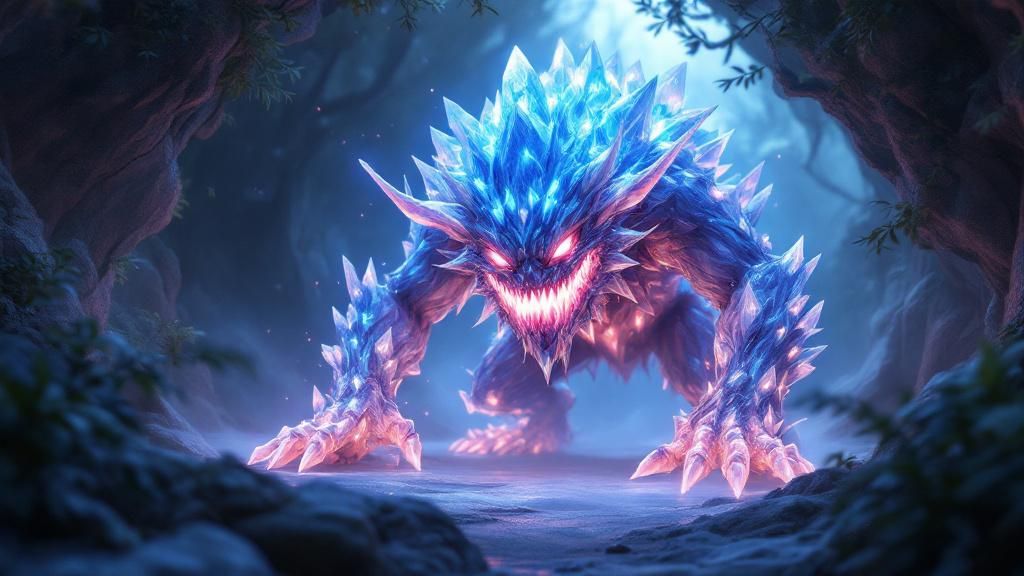
Monster Hunter Stories 3 presents a substantial environmental challenge through Invasive Monsters, strengthened forms of well-known beasts that have taken over the dens of scarce protected species across the game world. These tough opponents represent a central thematic focus of the game’s emphasis on habitat restoration, requiring players to drive them away rather than merely vanquish them through standard combat. Unlike ordinary monsters, Invasive creatures possess special abilities and habitat-specific traits that necessitate specific tactical approaches to overcome. With nine invasive beasts distributed across the game, each provides a distinct challenge to solve. This guide covers all of them, from the compulsory Invasive Yian Garuga encounter protecting a Rathian den in Azuria to the optional Invasive Plesioth hiding in Mirror Lake, detailing the tactics and weak points required to force away these invaders.
Examining Non-native Creatures and Habitat Rehabilitation
Monster Hunter Stories 3 incorporates ecological protection into its central storyline through the idea of Invasive Monsters—formidable creatures that have established themselves in the habitats of vulnerable wildlife. These powered-up variants go beyond simple combat encounters; they reflect the wider thematic focus of ecological restoration and equilibrium. By removing these invasive threats from fragile environments, players actively participate in restoring the natural world around them. The game converts what might otherwise be straightforward monster-hunting sequences into meaningful environmental interventions, where each victory contributes to the larger goal of preserving rare and vulnerable species populations.
What separates Invasive Monsters from their conventional variants is their ability to thrive in unfamiliar habitats, providing unique abilities and tactical advantages that traditional combat methods cannot overcome. Rather than focusing exclusively on raw damage output or elemental advantages, players must recognise and use particular habitat vulnerabilities tied to each monster’s changed ecosystem. This puzzle-like design encourages inventive thinking and strategic planning beyond standard combat approaches. Whether you’re facing a required story battle or an optional battle, understanding each Invasive Monster’s unique adjustments and vulnerabilities becomes vital for effectively removing them from vulnerable creature habitats.
- Invasive Creatures are powered-up versions with special environmental abilities
- Ecological restoration serves as the game’s central thematic element
- Each encounter demands particular tactical strategies rather than standard combat
- Nine Invasive Creatures lie waiting across the game world
Early Area Obstacles: Azuria’s Threatening Creatures
Yian Garuga and the Rathian Den
Invasive Yian Garuga functions as your introduction to Azuria’s invasive threat, strategically placed within a Rathian den on the region’s eastern reaches. The main story campaign takes you to this encounter, making it a required battle rather than an optional detour. This winged predator has claimed land rightfully belonging to the threatened Rathian, disturbing the natural ecological balance. Your primary objective isn’t purely to slay the creature outright, but rather to diminish its determination sufficiently to trigger a withdrawal, allowing access to the prized Rathian egg nestled within the den.
Breaking the Invasive Yian Garuga’s legs proves the key to victory in this early-game encounter. Whilst any weapon type can achieve this goal, Hammers and other blunt weapons significantly streamline the combat experience through their superior leg-breaking capabilities. At level fifty, this creature poses a formidable challenge for unprepared hunters, though you don’t need to secure a lasting win immediately. Coming back subsequently with a strengthened team allows you to pursue a decisive kill, but for now, causing it to flee suffices to progress your environmental restoration efforts.
Plesioth Aquatic Dominance
Unlike its Yian Garuga counterpart, the Invasive Plesioth lurking within Azuria remains entirely optional, presenting hunters with a real option in their advancement route. This aquatic invader has established dominion over Mirror Lake’s Lagiacrus den, forcing out an at-risk population from its ancestral home. Getting to this fight requires navigating the narrow channel located north of the Mirror Lake Catavan Stand, where the water-based danger awaits those willing to face it. The non-mandatory aspect of this encounter lets players to evaluate their capability before engaging in the battle.
Fire-based weaponry and monsties equipped with flame attacks, such as Ratha, form the essential arsenal for defeating Invasive Plesioth. The creature’s vulnerability to fire becomes your primary tactical advantage in this aquatic arena. By leveraging this fire weakness repeatedly during the encounter, hunters can methodically break down the monster’s defences and force its withdrawal from the Lagiacrus den. This environmental approach to combat illustrates how understanding each invasive creature’s specific vulnerabilities transforms seemingly impossible battles into achievable encounters.
The Seregios and Head-to-Head Combat
The invasive Seregios represents an escalation in difficulty as players advance through Azuria’s roster of invasive creatures. This formidable flyer requires a heightened aggressive strategy than previous encounters, favouring direct engagement over exploiting the environment. The creature’s flying capability and sharp attack patterns necessitate hunters to maintain constant pressure and careful defensive positioning throughout the battle. Thorough preparation is essential when confronting this particular threat, as its heightened strength calls for well-equipped teams and honed combat skills.
Success when facing Invasive Seregios depends on aggressive, head-to-head tactics rather than depending on specific elemental advantages or arena manipulation. Hunters must engage the creature directly, exploiting openings in its attack patterns whilst maintaining their own defensive positioning. This encounter marks a transition point where the strategic complexity of earlier invasive battles gives way to conventional hunting approaches, testing players’ core fighting skills and team coordination.
Woodland Trials: Canalta Area Invasive Beasts
Shogun Ceanataur’s Weak Defence
Invasive Shogun Ceanataur poses a considerable obstacle within Canalta’s thick woodland, where this crustacean predator has established dominion in an Endangered Species den. The creature’s heavily armoured exoskeleton and hostile territorial conduct make it a genuinely threatening encounter for unprepared hunters. However, under its fearsome appearance lies a critical vulnerability that careful hunters can utilise. Understanding this weakness transforms what initially appears to be an overwhelming battle into a controllable encounter requiring tactical precision rather than brute force alone.
The key to defeating Invasive Shogun Ceanataur lies in targeting its shell’s weak points during specific moments in its assault pattern. By directing your attacks on these weak zones rather than its hardened shell, hunters can steadily erode its defences and force a controlled pullback. Coordinating your monstie’s strikes alongside your own strikes amplifies the damage output significantly, allowing your team to sustain attacking pressure throughout the encounter. Patience and positioning prove far more effective than aggressive recklessness against this armoured adversary.
The Hidden Danger
The invasive Nerscylla inhabits Canalta’s shadowy groves, where the arachnid’s web-spinning capabilities and predatory instincts have surpassed all previous measures. This invasive species possesses an unsettling ability to render itself nearly invisible during battle, creating genuine tactical challenges for hunters experienced in conventional monster encounters. The creature’s advanced concealment abilities reshape the combat arena into a perpetual pursuit, where sight represents your most valuable asset. Adjusting your perception and tactical strategy proves critical when facing an opponent that refuses to remain visible.
Overcoming Invasive Nerscylla necessitates tracking methods that expose the creature’s whereabouts despite its stealth capabilities. Utilising monsties with heightened sensory capabilities or specific skills that penetrate illusions becomes essential in this encounter. Sonic strikes and area-effect abilities can force the arachnid creature into visibility, creating brief moments for focused attacks. Victory necessitates composure, map consciousness, and the willingness to adjust your conventional tactics to accommodate this creature’s particular defence method.
Arzuros and Honey-Powered Enhancements
Invasive Arzuros traverses Canalta’s abundant honey regions, where the ursine beast has become accustomed to its surroundings in surprising and perilous ways. This invasive variant displays greater force and ferocity, sustained by its feeding on the area’s plentiful honey supplies. The monster’s strengthened physiology makes it notably more durable than typical Arzuros battles, requiring hunters bring superior equipment and experienced companions. Understanding the way environmental factors substantially improves its strengths offers essential understanding into crafting an effective battle strategy.
Fighting Invasive Arzuros effectively requires cutting off its supply of natural honey reserves that maintain its enhanced power levels. By progressively removing these energy reserves across the arena, hunters slowly weaken the creature’s supernatural resilience and combat effectiveness. Alternatively, exploiting ice-based attacks and monster companions creates opportunities to reduce its mobility and reduce its overall threat level. The encounter favours careful consideration and terrain use over direct offensive approaches, highlighting the game’s tactical nature to invasive beast encounters.
Advanced Encounters: Tarkuan and Serathis Aggressive Monsters
| Monster | Location | Key Strategy |
|---|---|---|
| Invasive Odogaron | Terga Volcano | Exploit dual weakness system using water and thunder elements simultaneously for maximum damage output |
| Invasive Diablos | Scorched Badlands | Time hammer strikes to coincide with meteor impacts, using environmental hazards as offensive weapons |
| Invasive Khezu | Thunderous Caverns | Strengthen monsties’ kinship bonds to unlock cooperative attacks that pierce electrical defences |
| Invasive Shogun Ceanataur | Sunken Ruins | Target the creature’s shell-based armour with slashing weapons whilst avoiding its crushing claw attacks |
Odogaron’s Dual Weakness System
Invasive Odogaron offers one of Monster Hunter Stories 3’s most intricate puzzle encounters, demanding hunters exploit a sophisticated dual weakness system. This formidable creature dwells in Terga Volcano, where it has developed resistance to conventional single-element attacks. The creature’s unique physiology requires simultaneous exposure to both water and thunder elements, forcing hunters to coordinate their monsties’ abilities tactically. Bringing a balanced team able to provide both elemental types proves essential for success, making preparation and team composition absolutely crucial before confronting this formidable foe.
Successfully vanquishing the Invasive Odogaron requires careful timing and well-coordinated monsties that enhance each other’s elemental capabilities. Hunters must coordinate water-based attacks with lightning-based attacks, creating devastating combination attacks that take advantage of the creature’s combined vulnerabilities. This encounter encourages strategic thinking and highlights Monster Hunter Stories 3’s resolve to make invasive battles feel like environmental puzzles rather than simple combat battles. Mastering the dual vulnerability system unlocks routes to victory that brute force alone cannot reach.
Diablos with Meteor Hammer Precision
Invasive Diablos roams the Scorched Badlands, where meteors dominate the landscape and fundamentally alter combat dynamics. This variant creature has learned to exploit the chaotic environment, making meteor impacts integral to its attack patterns and survival approach. Hunters must master predicting meteor trajectories and coordinate hammer strikes accordingly, converting environmental obstacles into offensive opportunities. The creature’s connection to its surroundings creates a battle that extends past conventional hunting, requiring environmental consciousness and precise positioning throughout the encounter.
Victory against Invasive Diablos demands hunters utilise the meteor hammer accuracy method, where perfectly timed blunt weapon strikes align with meteor strikes arriving for massive damage increases. This interplay of landscape dangers and hunter actions demonstrates Monster Hunter Stories 3’s innovative approach to invasive creature encounters. Players need to forsake conventional tactics, instead adopting the turbulent terrain as an ally. Perfecting meteor prediction and strike precision converts an overwhelming scenario into a manageable puzzle where environmental knowledge becomes as valuable as combat skill.
Khezu’s Kinship-Based Victory
Invasive Khezu makes its home in the Thunderous Caverns, a creature whose electrical barriers have been heightened by its environment to remarkable degrees. Conventional attack methods prove inadequate against this invasive variant’s formidable electrical defences. Instead, hunters must forge deep connections with their monsties, unlocking cooperative attacks that pierce through electrical defences. The encounter highlights relationship-building and team synergy, favouring those who have dedicated effort to fortifying their monstie partnerships throughout their Monster Hunter Stories 3 adventure.
Overcoming Invasive Khezu marks a pinnacle of the game’s kinship mechanics, where deep connections between hunters and monsties translate into tangible combat advantages. Joint assaults powered by authentic bonds deal strikes that surpass the creature’s power-based protection, producing a profoundly rewarding victory that appears hard-won through dedication. This encounter converts Khezu from a basic electrical hindrance into a meaningful test of hunter-monstie relationships, demonstrating how Monster Hunter Stories 3 masterfully merges storytelling aspects with difficult combat situations.
Strategic Preparation and Progression Tips
Approaching Invasive Monsters requires significantly more preparation than regular battles. Before engaging any invasive beast, ensure your team has reached an suitable rank and that your monsties possess complementary elemental affinities and damage varieties. Study each monster’s distinct habitat benefits and plan your loadout accordingly. Rushing into battle without adequate gear or understanding the puzzle mechanics will result in swift defeat. Take time to gather intelligence from NPCs, explore the surrounding environment thoroughly, and consider whether you’re truly prepared for the challenge ahead or if further levelling would be prudent.
Remember that most Invasive Monsters don’t need to be defeated immediately upon discovery. The game’s narrative framework enables you to retreat, enhance your party, and return later when you’re substantially stronger. This flexible approach avoids player frustration and preserves the sense of progression throughout your Monster Hunter Stories 3 experience. Prioritise plot-important invasive fights first, then handle optional battles once you’ve accumulated better gear and more advanced monsties. Don’t hesitate to experiment with different team compositions during practice attempts, as finding powerful synergies between your monsties and weapons frequently proves more beneficial than raw level advantages.
- Match elemental weapons and monsties to each invasive beast’s specific weaknesses and surrounding terrain.
- Return to earlier-faced invasive monsters after levelling up significantly for assured success.
- Explore carefully throughout invasive monster dens to discover concealed tactical benefits and strategic openings.
- Build diverse monstie teams with different damage approaches to handle unexpected combat situations successfully.
- Utilise the bond mechanics extensively, as joint strikes often deliver crucial damage breakthroughs.
