
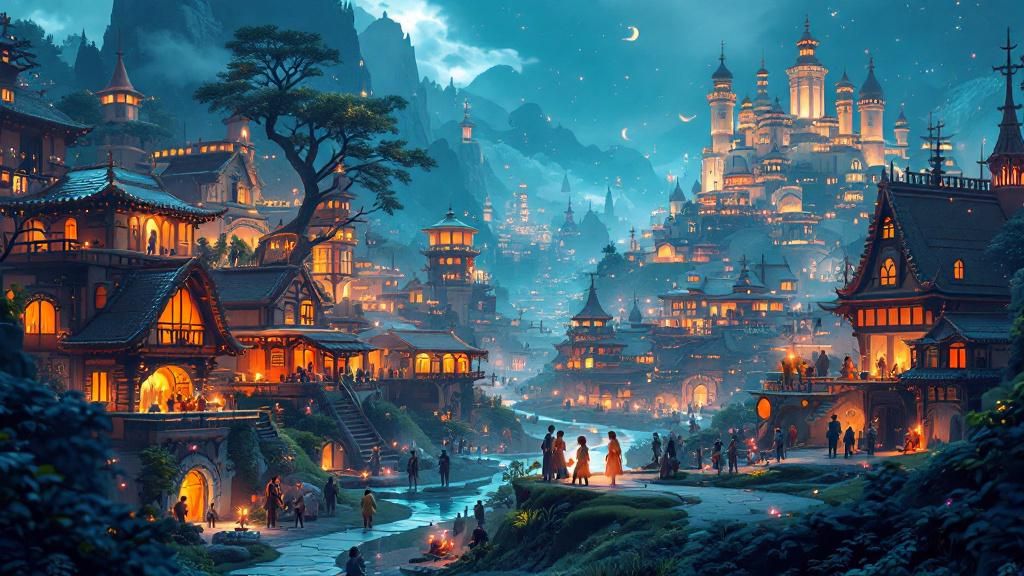
Two experienced developers from EVE Online have invested over a decade crafting an ambitious new MMO through their studio Klang Games, where the groundbreaking twist is that your characters never truly cease existing. Called Seed, the game unveiled a striking new trailer at GDC this week, featuring an bespoke composition by Icelandic artist Björk. Unlike traditional MMOs where characters remain static whilst you’re offline, Seed’s “Seedlings” keep living in the persistent world around the clock, working, building, and advancing whether their players are logged in or not. The result is a richly immersive society-driven experience that takes cues from The Sims, Dwarf Fortress, and RimWorld, offering a level of character persistence and world-building depth rarely seen in the genre.
The Vision Behind Seed’s Ecosystem
At the core of Seed lies a radical reimagining of what an MMO can be. Rather than treating the game world as a static backdrop that pauses when players log off, Klang Games has built a dynamic, evolving simulation where every character—every Seedling—continues their existence independently. This means your character might be tending their shop, crafting resources, or participating in society-level decisions whilst you’re away from your desk. The ambition is staggering: the developers have integrated everything from individual skeletal structures to intricate economic frameworks, creating a simulation so intricate that it rivals single-player titles like Dwarf Fortress and RimWorld in terms of gameplay complexity.
The lasting nature of Seedlings significantly transforms how players interact with the world. You’re not just signing in to finish objectives or accumulate loot; you’re maintaining an ongoing life within a community. This approach builds substantially on EVE Online’s tradition of emergent gameplay and player-driven narratives, where the actions of thousands produce genuine drama and consequence. By permitting self-directed character action, Seed inspires players to consider the future about their roles within societies, whether as lawmakers, merchants, or humble craftspeople. The result is an MMO where genuine advancement happens even when you’re offline.
- Characters keep living and working whilst players are offline
- Societies managed by laws established by player leaders
- In-depth simulation covering taxes, resources, and infrastructure
- Players can participate in large cities or small village communities
Communities as the Primary Play Experience
From Bread-Related Disagreements to Electoral Upheaval
Societies constitute the beating heart of Seed’s core mechanics, shifting the MMO from a lone experience into a true social environment. Players within each society work collaboratively to create and uphold their community, whether they’re working as elected lawmakers, managing commercial ventures, or acquiring supplies as regular members. The scale can differ significantly—some societies might develop into vast futuristic cities with thousands of members, whilst others remain small settlements where a few close associates chase mutual crafting aspirations. This versatility ensures that every player, regardless of preference for wide-reaching governance or small-group cooperation, finds their niche within the world.
The team behind Klang Games have witnessed firsthand how societies generate the kind of emergent drama that made EVE Online legendary. From disagreements about bread distribution to complete political upheavals, the player-run governance systems create genuine tension and repercussions. Laws passed by society leaders significantly affect how resources flow, how buildings are constructed, and how individual Seedlings operate within their communities. This level of systemic depth means that every decision matters, and every participant’s involvement—whether monumental or modest—shapes the course of their community’s direction.
What makes this approach distinctly appealing is that players aren’t required to pick between grand ambitions and intimate gameplay. Someone might run a massive society with complex taxation systems and facilities oversight, whilst simultaneously maintaining a humble personal production setup or contributing to a ally’s village. The game’s structure allows for this diversity, recognising that various gamers want distinct styles. A Twitch streamer could create a flourishing city with their community, whilst a team of multiplayer fans pursues self-sufficiency in their corner of the world, and both experiences are equally valid and gratifying.
- Player-elected leaders establish laws governing resource distribution and construction
- Societies range from sprawling metropolises to intimate hamlet communities
- Natural conflict and conflict emerge organically from rival objectives and governance decisions
Connecting Simulation Players and Caretaker Players
Seed’s appeal goes further than traditional MMO players chasing competitive success or social prominence. The game deliberately caters to simulation fans—those captivated by the granular mechanics of titles like Dwarf Fortress and The Sims—who may have previously felt alienated by multiplayer games’ focus on combat or time-consuming grinding. By embedding deep simulation systems into a continuous online environment, Klang Games creates a space where players can indulge their passion for mechanical depth whilst collaborating with others. Whether handling character needs, refining resource systems, or creating elaborate settlement layouts, simulation devotees find legitimate avenues for expression within Seed’s framework.
Equally important is the game’s support for what might be termed “caretaker” gameplay—the design principle that your Seedlings keep progressing and contributing whilst you’re offline. This removes the punitive feeling common to many MMOs, where inactivity means lost opportunity or resource depletion. Instead, players can engage with Seed asynchronously, checking in on their characters’ development and involvement without the worry about missing crucial moments. This approach to design particularly appeals to players with restricted gaming hours, parents balancing multiple commitments, or anyone seeking a more laid-back way of playing that respects real-world constraints.
| Player Type | Seed Experience |
|---|---|
| Simulation Enthusiasts | Deep engagement with character skeletal systems, resource management, and settlement design inspired by Dwarf Fortress and The Sims |
| Casual Community Builders | Running intimate hamlet societies with friends, pursuing shared crafting goals without pressure or competition |
| Content Creators | Establishing sprawling metropolises with Twitch communities, managing complex governance and infrastructure systems |
| Asynchronous Players | Offline character progression and contribution, eliminating pressure to maintain constant presence or miss opportunities |
The brilliance of Seed’s design is evident in its resistance to compel players into a single playstyle. A simulation lover might dedicate considerable time honing their character’s home interior and production process, whilst also being part of a wider social network where their efforts have value to many other players. This range of legitimate experiences—from personal to expansive, from synchronous to asynchronous—indicates Klang Games has authentically engaged with what varied players want from an MMO, rather than imposing a uniform model.
Mobile Integration and Artificial Intelligence Dialogue
Klang Games has extensive plans to extend Seed beyond the traditional desktop MMO experience through mobile connectivity. The studio imagines players monitoring their Seedlings’ progress whilst commuting, at work, or during other moments of downtime. This mobile-first approach aligns seamlessly with the game’s asynchronous philosophy, allowing players to oversee their characters and contribute to society activities without requiring lengthy gaming sessions. The mobile companion app would theoretically enable players monitor resource gathering, respond to society matters, and even engage in light crafting tasks, keeping them connected to their virtual lives without demanding constant presence at a computer.
Equally fascinating is Klang Games’ investigation of generative AI for improving player interactions within Seed’s societies. Rather than relying exclusively on player-to-player communication, the developers are exploring AI-driven dialogue systems that could enable conversations between Seedlings and NPCs, or even between players and their own characters when offline. This technology could strengthen immersion and storytelling possibilities, generating more dynamic social interactions within communities. However, the studio exercises caution about implementation, understanding the need to balance technological novelty with maintaining the authenticity of player-driven narratives that make MMOs compelling.
The Promise and Pitfalls of Generative Artificial Intelligence
The prospective benefits of AI incorporation in Seed are substantial. Generative systems could stock the world with interactive NPCs, produce procedurally generated quests tailored to individual players, and support richer storytelling within societies. AI conversation systems might help newer players work through intricate social structures or deliver dynamic feedback on character development. For a game as simulation-intensive as Seed, AI could manage countless background calculations and interactions that would otherwise necessitate enormous development resources, enabling the team to centre on player-oriented features and community tools.
Yet substantial concerns persist regarding genuine quality. Too much reliance on AI-generated content risks diluting the creative input from players that characterises engaging MMO communities. Players might perceive their engagement seem inauthentic if conversations are algorithmically generated rather than player-authored. Klang Games must thoughtfully balance the role of AI—improving without displacing authentic human engagement—to ensure Seed stays at its core a title focused on collectives of real people, not artificial exchanges masquerading as genuine connection.
Project Advancement and Upcoming Release Strategy
Klang Games’ ten-year development journey has delivered significant progress towards realising Seed’s expansive vision. The studio’s recent appearance at GDC, featuring a cinematic trailer showcasing an original composition by Björk, indicates the game’s evolution from initial idea to approaching playable state. The developers have spent years perfecting the intricate systems that allow Seedlings to remain in the world independently, whilst concurrently building out the social systems that control player engagement and progression. This prolonged development period demonstrates the intricacy of creating an MMO where every bone in a character’s skeleton matters, and where taxation systems must function alongside home customisation options.
Regarding release schedules, Klang Games has remained notably careful about setting firm release dates, opting to guarantee systems are robust rather than hurrying to launch. The studio’s focus remains on rigorously testing Seed’s core mechanics with gaming communities and refining the balance between individual character progression and society-wide simulation. With the GDC showcase showing concrete advancement and fresh impetus, speculation suggests the game may move into broader testing stages within the coming years. However, the developers’ commitment to quality over rapid release indicates that Seed will arrive only when its persistent world systems can genuinely provide on the potential of genuinely dynamic, evolving communities.
