
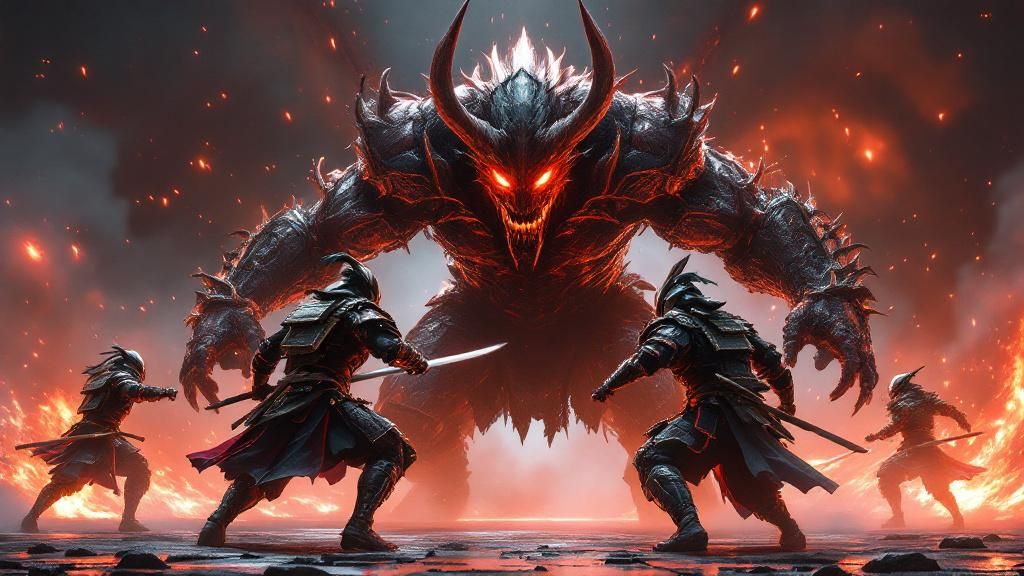
Sucker Punch Productions is releasing Ghost of Yōtei Legends, an online cooperative multiplayer mode for its award-winning PS5 samurai-themed adventure, on March 10, 2026. The supernatural-focused update comes at no extra charge for all Ghost of Yōtei owners, building on the groundwork laid by Ghost of Tsushima’s Legends mode while reimagining the sequel’s combat mechanics and threats through a mythological perspective. Legends Lead Designer Darren Bridges disclosed that the multiplayer mode has been in active development alongside the single-player campaign, with the core team focused on adapt Yōtei’s mechanics for cooperative play. The mode offers new enemy encounters, playable classes, and a new approach on the game’s antagonists—the Yōtei Six—redesigned as towering demonic bosses suited for multiplayer combat.
Developing Legends based on Strategic Groundwork
Ghost of Yōtei Legends constitutes a deliberate evolution of the multiplayer formula introduced in Ghost of Tsushima’s Legends mode. Rather than just transferring current systems, Sucker Punch Productions has carefully redesigned the sequel’s new systems and battle systems specifically for cooperative play. The creative journey turned out unique, with a core multiplayer team developing simultaneously with the single-player campaign throughout production. This approach enabled the team to evaluate whether Yōtei’s fresh mechanics would function in multiplayer contexts, iterating and refining systems as the primary title neared completion before committing the entire team to fleshing out the Legends experience.
The evolution of the Yōtei Six into mystical foes exemplifies how Legends recontextualizes the story’s direction. Rather than faithful depictions of the warlords who plagued Atsu’s story, these antagonists have been transformed into legend through centuries of retelling. Details have been exaggerated and embellished, converting powerful historical figures into towering infernal creatures towering over players. This inventive reworking serves a functional role—scaling encounters appropriately for multiple warriors while preserving the mystical ambiance that sets apart Legends from the anchored single-player story.
- Core multiplayer team remained active during Ghost of Yōtei’s development cycle
- Systems evaluated and improved for team-based mechanics
- Full team transition accelerated polishing and content expansion
- Mythical retelling explains paranormal creature transformations
Four Classes, Endless Combat Options
Samurai, Archer, Sellsword, and Shinobi Positions
Ghost of Yōtei Legends provides players four distinct character classes, each delivering combat-specialized capabilities to cooperative missions. The Samurai class excels in close-range combat, wielding powerful sword techniques and defensive stances that anchor the team’s frontline. The Archer delivers ranged support, unleashing arrows at enemies from distance while controlling battlefield positioning. The Mercenary introduces powerful arms and splash damage, devastating groups of supernatural foes. Finally, the Shinobi class emphasizes swift movements, concealment, and accurate attacks, allowing players to strike from the side and dispatch foes with surgical efficiency. Each class significantly transforms how players tackle encounters.
The class structure encourages diverse team compositions, recognizing players who coordinate their abilities and capitalize on supporting abilities. Rather than forcing a single best configuration, Sucker Punch has created encounters that accommodate different approaches and strategic choices. Whether players favor aggressive rushdowns, strategic sustained fire, or hit-and-run assassination tactics, the four classes deliver meaningful choices that shape both solo capability and group coordination. This flexibility guarantees that team experiences continue to be dynamic and engaging through repeated sessions.
- Samurai dominates close-range combat with sword mastery and defensive capabilities
- Archer manages distance, eliminating threats from range with accurate shots
- Mercenary inflicts heavy damage and area-of-effect devastation to multiple enemies
- Shinobi excels in stealth, speed, and surgical precision elimination tactics
Sucker Punch crafted the class progression system to reward specialization while preserving accessibility for players new to the game. As warriors develop their preferred class, they unlock upgraded skills, powerful ultimate moves, and strong gear enhancements that amplify their fighting style. The progression appears purposeful rather than tedious, with each unlock clearly boosting how the class operates in fights. This structured advancement creates natural learning curves, allowing players to develop expertise with their preferred role while slowly adding more complex mechanics and interactions that enhance teamwork dynamics over long gaming sessions.
Mythic Bosses and the Supernatural Domains
Ghost of Yōtei Legends reinterprets the Yōtei Six—the warlords that haunted Atsu’s original campaign—as towering mythic entities born from generations of stories and embellishment. Rather than facing formidable historical foes, players confront 15-foot demonic bosses whose legends have become wildly exaggerated through time. This story restructuring reshapes established foes into mystical adversaries worthy of team-based battles, where their massive size and supernatural abilities demand synchronized group tactics. The shift from historical warlords to legendary demons establishes a narrative divide between the grounded single-player story and the imaginative cooperative gameplay, allowing Sucker Punch to develop more inventive adversary concepts without compromising the main campaign’s narrative integrity.
Each mythic boss commands a distinct mystical territory, bringing environmental hazards and thematic encounters that transcend simple combat arenas. These domains embody the bosses’ mythic past and corrupted nature, forming atmospheric battlegrounds that push teams both mechanically and tactically. The environmental design complements each boss’s combat patterns, compelling groups to adjust their approach based on terrain, hazards, and the mystical energies at play. This multifaceted design ensures that boss encounters function as epic confrontations against entities beyond mortal understanding, demanding teams to master not just their classes but also the unique conditions each mythic domain presents.
| Boss | Signature Threat |
|---|---|
| Demon Warlord | Devastating melee attacks with wide area sweeps |
| Spectral Archer | Projectile barrages that rain from the sky |
| Corrupted Samurai | Unpredictable sword techniques and phantom strikes |
| Void Summoner | Conjures supernatural minions and reality distortions |
| Cursed General | Combines multiple attack patterns with environmental manipulation |
Opposing Factions and Secondary Boss Battles
Beyond the main supernatural bosses, each warlord commands a group of devoted supernatural followers that players must overcome before confronting the leader. These group adversaries include everything from corrupted soldiers to minor demonic entities, each presenting unique battle challenges that test various elements of team coordination. Mini-bosses in each faction serve as mini-encounters, forcing players to participate in preliminary battles that deplete your supplies and test their tactical flexibility. The layered enemy structure guarantees multiplayer missions resemble genuine military campaigns rather than basic combat encounters, with you advancing across intensifying obstacles before confronting the final supernatural threat.
The faction system promotes teams to create tactical approaches for handling diverse enemy types while preserving resources for the primary boss fight. Intermediate bosses present mechanics that foreshadow the primary boss’s abilities, establishing organic challenge scaling within each mission. Players must balance aggression with caution, knowing that heavy damage sustained during faction encounters puts them at risk for the final confrontation. This structure rewards planning and communication, making completed missions feel earned rather than inevitable, while the diverse intermediate boss fights keeps missions fresh across several runs.
Types of Missions and Progressive Difficulty
Main Missions and Assault Battles
Ghost of Yōtei Legends offers narrative-driven story missions that blend supernatural tales around the Yōtei Six and their mythic transformations. These adventures guide players through escalating encounters with opposing forces and sub-bosses before reaching battles against the dark lords themselves. Story missions offer insight for the legendary reimagining of Atsu’s enemies, reshaping historical rivalries into mythical confrontations. Each mission builds upon earlier triumphs, presenting additional foe categories and environmental hazards that call for tactical flexibility. The structured narrative progression ensures players enjoy a unified narrative rather than disconnected skirmishes.
Incursion Battles constitute the fundamental test of Legends mode, pitting four-player teams facing waves of supernatural threats across mythical battlefields. These encounters demand teamwork and personal ability simultaneously, demanding players to manage positioning, resource management, and ability cooldowns. Incursions escalate in intensity as players advance, introducing harder enemy variants and more complex boss encounter designs. The progressive difficulty system ensures both newcomers and veterans find suitable difficulty levels, with optional modifiers enabling experienced teams to customize their experience. Completing incursions unlocks loot that boost character progression and provide cosmetic customizations.
Survival Mode and Defense wave Mechanics
Survival Mode eliminates narrative structure to focus on straightforward combat staying power, challenging teams to withstand endless waves of mounting enemies. Players must survive as long as possible against escalating supernatural forces, with intensity rising dramatically as they progress through rounds. Defense wave systems force constant adjustment, as foe varieties rotate and intensify with each successive round. Teams earn rewards based on survival length, encouraging tactical decisions and efficient enemy elimination. The mode highlights cooperative play and team coordination, prioritizing unified approaches over solo play.
Wave defense mechanics introduce shifting environmental conditions and unique enemy types that appear at predetermined moments, maintaining engaging gameplay across extended sessions. Challenge adjustments enable players to customize their survival experience, increasing rewards for higher-risk challenges. Limited resources grows more essential as waves progress, forcing difficult decisions about ability usage and tactical placement. Leaderboards monitor player accomplishments, creating competitive incentives for players seeking recognition. The infinite scope of Survival Mode provides indefinite replayability, attracting players who crave relentless difficulty without story limitations.
- Adaptive difficulty scaling provides appropriate challenge levels for players of every ability
- Dynamic enemy rotations avoid repetitive gameplay and encourage flexible strategy
- Reward progression grants access to visual upgrades, gear, and personalization features
Cosmetics, Lobby Functionality, and Upcoming Features
Ghost of Yōtei Legends recognizes character advancement with extensive cosmetic customization options that allow warriors to personalize their samurai appearance across various difficulty tiers and game modes. Cosmetics go beyond traditional armor skins, including weapon designs, emotes, and character effects that showcase achievements earned through Legends gameplay. The cosmetic economy motivates players to engage with varied content, as distinct activities unlock unique visual rewards inaccessible elsewhere. Sucker Punch Productions designed the cosmetic system to honor player accomplishments while maintaining visual distinction between experienced and newcomer samurai, creating aspirational goals for sustained engagement.
Lobby tools streamline the multiplayer experience by offering intuitive matchmaking and team assembly tools for up to four players. Pre-mission preparation interfaces allow teams to coordinate loadouts, plan tactics, and get ready for upcoming challenges before committing to expeditions. Social features encourage community interaction, enabling players to build lasting teams and monitor companion advancement through dedicated leaderboards. The developers committed to continuous content updates post-launch, with seasonal additions designed to introduce new missions, cosmetics, and supernatural encounters that broaden the Legends experience throughout Ghost of Yōtei’s lifecycle.
- Cosmetic rewards become available via completing difficult incursions and endurance checkpoints
- Seasonal content refreshes bring new objectives and limited-time cosmetic offerings
- Matchmaking systems connect players of comparable abilities for fair gameplay
- Squad progression monitoring encourages sustained squad building and cooperative play
The Raid Experience and Intense Team Coordination
Raid encounters showcase the apex of Ghost of Yōtei Legends’ team-based challenges, calling for superior coordination and expertise from four-person squads. These extended expeditions include numerous boss battles, sophisticated environmental mechanics, and complex enemy formations that punish disorganized play while rewarding synchronized tactics. Raids present narrative-driven objectives that surpass basic enemy defeat, demanding teams to complete additional objectives while balancing combat demands. The raid structure fosters players to establish specialized positions within their groups, fostering mutual reliance and collaborative problem-solving during extended expeditions.
Hard-mode modifiers convert raids to pinnacle challenges of coordination and teamwork, removing safety nets and incorporating harsh penalties for mistakes. Teams must deliver perfect ability sequences, manage resources carefully, and adjust tactics on the fly as encounters progress. Raid completion unlocks exclusive cosmetics and status recognition that demonstrate expertise to the broader community. The rigorous structure of raids establishes aspirational gameplay for hardcore enthusiasts, creating clear progression pathways from casual multiplayer to hardcore endgame challenges.
